

Why I'm done with Substack Notes
And my thoughts on a platform that has stopped serving long-form writers as its primary audience—even if it hasn’t realized it yet

I’ve been taking a break from Substack lately, which is ridiculous since I’ve only been here for six months.
The reason? Notes were breaking my brain.
I’d run a thriving online business for ten years without social media, and I was happy that I’d managed to elude the craziness.
And when I decided to give a serious shot at a writing career, I thought: Substack is the way to go—a peaceful place where I can showcase my writing and gain subscribers who will become readers.
I’d been aware of the platform for years, following a bunch of newsletters that I’d read directly in my email. But when I took the plunge and started publishing here six months ago, Substack didn’t look quite as I’d imagined it. It had an app, videos, live streaming, and it was all centered on Notes.
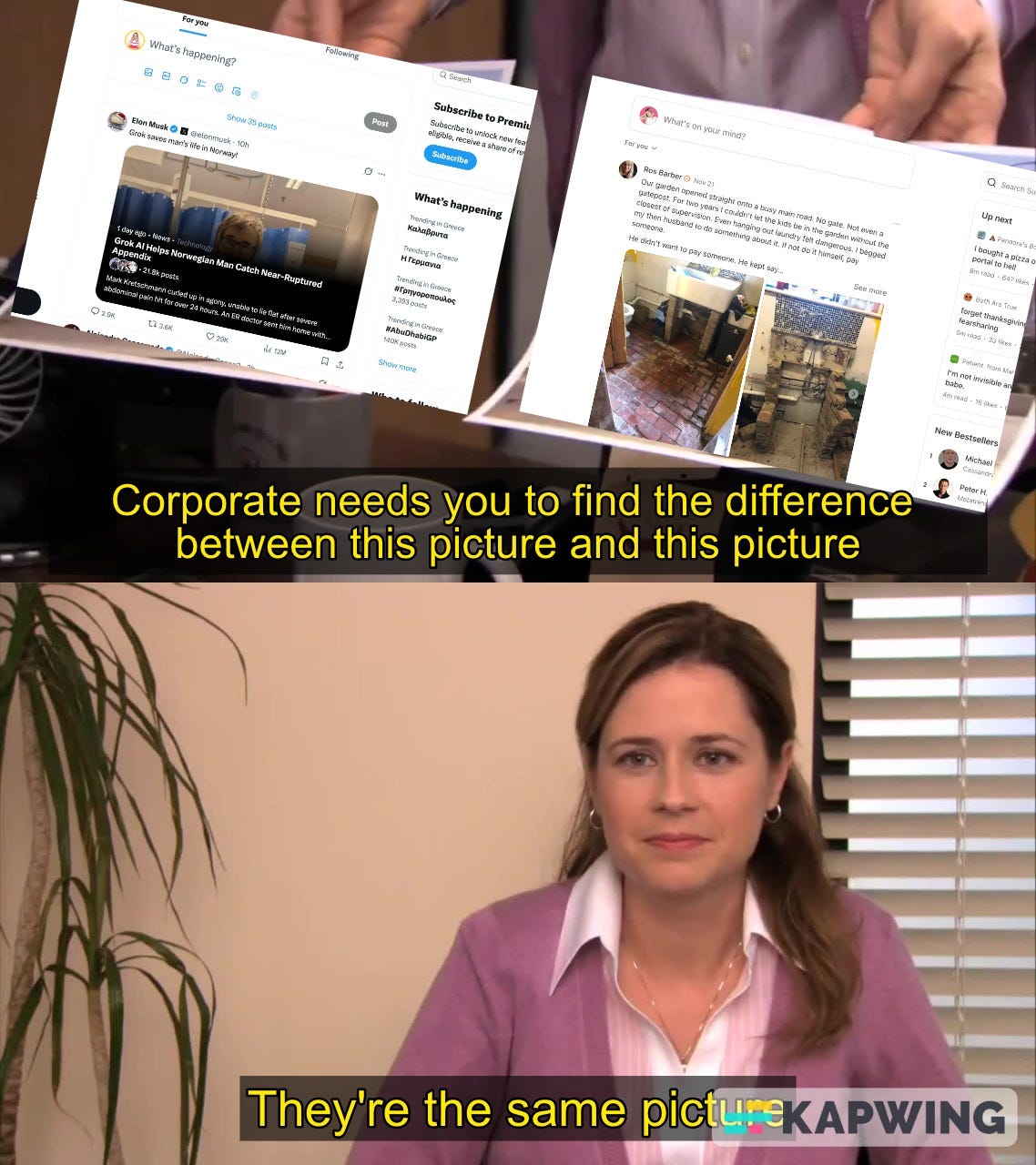
I researched Notes a bit. They were Substack’s response to Elon’s aggressive clampdown after he took over Twitter, which cut off creators’ ability to funnel outside audiences into their newsletters.
Wherever I looked, Notes seemed like The Way To Go on Substack. It made sense: give people a taste of your long-form writing and they’ll come for more. It did look awfully similar to X/Twitter, but I was new so maybe I wasn’t getting it right?
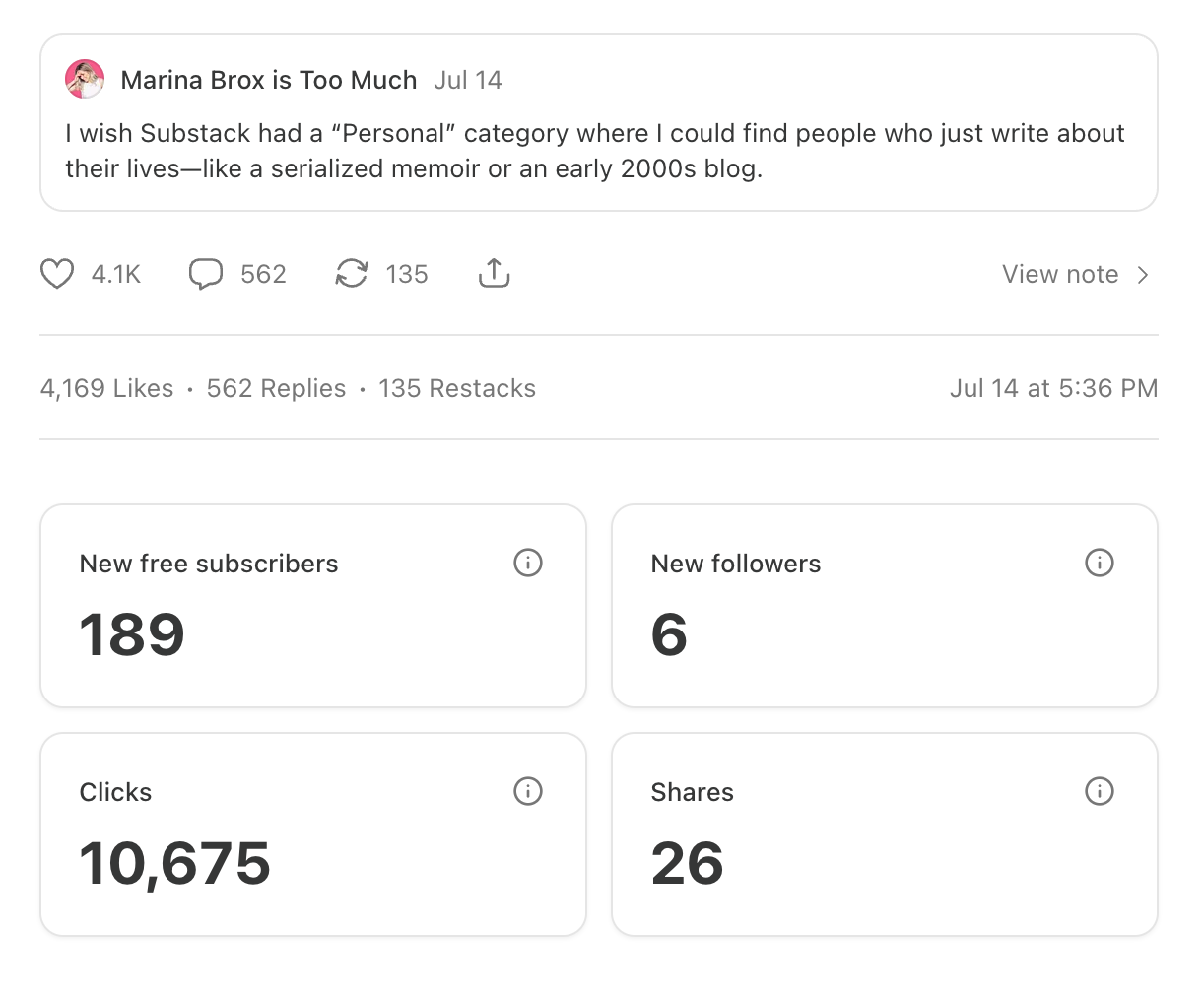
My long-form articles got attention and engagement, but not shares or new subscribers. My Notes were bringing in way more people.
A one-line Note about wanting Substack to create a category for personal essays brought in almost two hundred new subscribers. Another, about searching for a house on a little Greek island, gained almost fifty more.
My most read and shared long-form article, which took me days to draft and polish, has resulted in three new subscribers.
Three!
So, really, what is a girl with writing ambitions to do? Dedicate time to Notes. Put out at least two or three a day, try to be smart, funny, engaging. Slow down my long-form publishing schedule, from once a week to twice a month. Play the long game, be strategic, patiently blow on the flames of the algorithm.
The problem? Notes were ruining both my ability to read and write long-form.
As an experiment, I just scrolled through Notes for thirty seconds and I found an interesting article. But because my brain was in Doritos mode, I clicked, scanned the article, scanned the comments, got angry a few times, clicked a few hearts, hopped to two related articles, hearted them, and now I’m clenching my jaw so hard it hurts.
As a writer, I’m happier when I’m working on long-form pieces. My deranged and envious brain becomes more compassionate and observant. I stay still for longer, I find more of the type of meaning I believe in—powerful but ambiguous, in a world where uncomfortable and conflicting truths can coexist.
But then there’s my Notes brain. Nothing in my life is safe from it because the question is always: can this become viral? Can I get engagement? Will this put my work in front of more eyeballs?
So if my daughter writes a cute letter to Santa or my Greek friend shares a bizarre story that involves goats and at least three different saints, my mind immediately goes to how can I turn this into a punchy little text that people will want to restack.
Which makes me feel dirty and icky and mercenary, and also overrides my long-form writer’s brain because I’m too busy collecting soundbites.

“I can tell when you’re spending more times on Notes, because you start looking miserable,” my husband said to me not long ago.
But how could I? Notes are good! Notes are tHe DisCoVeRaBiLiTy EnGiNe, powered by The Good Algorithm™
And I needed to be discovered like a child actor ready for Hollywood. How would my writing find its people? How would I land an agent, a publisher, a Netflix deal and, ultimately, a private island where I could lounge all day and drink cocolocos?
I. Must. Note. I’d tell myself every day after putting the kids to sleep, as I polished and published my Notes and interacted with the feed to show Substack that I meant business, that I was worth putting in front of others.
But I was fucking miserable, not writing my essays or my novel, my creativity drowning in snippets and one-liners.
So I decided to stop.

I felt so burnt out it wasn’t even funny. I also felt weak and lazy. Why couldn’t I keep the pace? Why couldn’t I just do the work and swallow the bitter pill that might finally make my writing visible?
After all, I was the person who’d sent a daily email to my previous audience for four years straight. I’d had a personal blog for ten years with almost two thousand posts. I’d written two novels, various nonfiction essays, countless blog posts.
What the fuck was wrong with me?
Eventually, I decided to surrender. I was burnt out—there was no way around it, so I’d better rest. I committed to just stopping and seeing what would happen.
One day, after two weeks without Notes or any form of writing, I was walking around my neighborhood and I started thinking about my novel.
It was so nice and organic. My brain wanted to go back to my craft. I started fixing plot points, recording voice notes, and squinting under the Greek sun to reread my draft on my phone. Later that day, I sat in front of my computer and wrote. And I’ve been writing ever since. Not every day, not a lot, but constantly, faithfully, and almost joyfully. There’s still resistance and struggle, but it’s the good type of struggle, the one I recognize and befriend as a long-time writer.
Then, a few days ago, I logged into Substack to read someone else’s newsletter, and there it was: the fucking bell with its fucking notifications. And, for all their virtue-signaling about championing writers, you can’t turn off notifications on Substack! Whenever you want to interact with the platform, the bell is there, bringing you back into the rabbit hole.
So I clicked.
And guess what?
I had gone (mildly) viral.
With a note about hotels vs Airbnbs, no less.
WTF!
The Nerd said the platform might be pumping my work to lure me back in. I called him a tin-hatter. But there I was, reading what dozens of strangers had to say about hotels and Airbnbs, and gentrification, and the economy. There I was, again, deep in Social Media, Inc., when I only wanted to read an article.
And there went my peace of mind, swirling down the drain of my feed.
I snapped my laptop closed and made a decision:
I’m fucking done with Notes.
Marina out.
[Disclaimer: I will repost my new articles on Notes. What I mean is, I’m done with writing specifically for Notes and interacting with others there. I love you guys—I just prefer to read your essays.]
I’ve been reflecting a lot on all this. Notes, us as writers, Substack, the cultural landscape, and basically The Future Of Humanity.
And here are a few things I need to say about it.
Notes are ruining Substack for long-form writers
I’ve already gone into this, but allow me to hammer it home.
If you had a restaurant inside a mall and the owner insisted that the best thing for everybody was to put a big food court at the entrance where you can offer free food samples, it might make sense at first.
The reality is that after eating finger food for hours, people are just too full to go to your restaurant. It’s too quiet, your meals are too elaborate, and trying a bit here and there is just easier.
But Marina, you might say, I am gaining subscribers from my Notes!
Yeah, I know, and you’re not alone!
Numbers are growing thanks to Notes, yep. But I’m not sure it leads to the type of engagement I want people to have with my content.
And it’s not the readers’ fault! I know I have thoughtful, engaged, smart subscribers, and I follow hard-working writers. It’s just hard to overcome an environment that sets you up for brainrot from the moment you land on the homepage.
Substack is not a good place for writers anymore
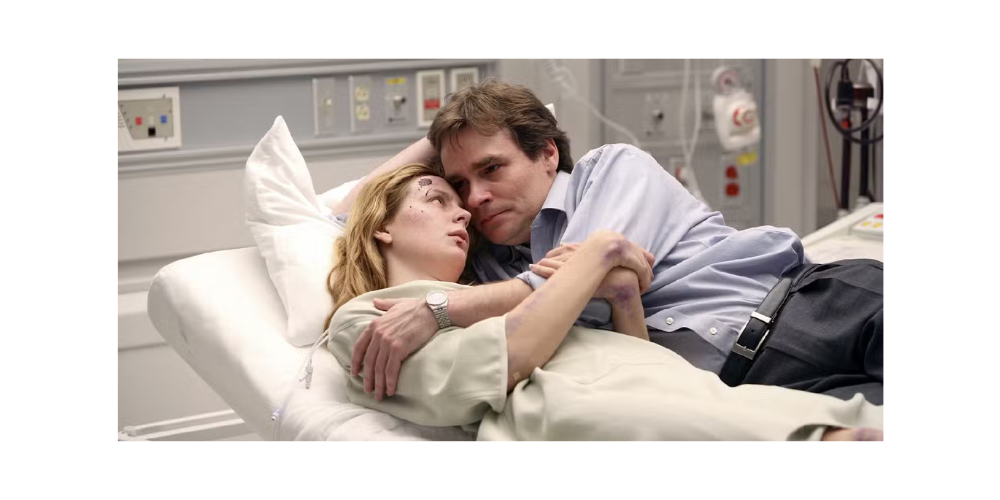
Remember that House, M.D. episode where Amber, Wilson’s girlfriend [SPOILER ALERT, although is it really still a spoiler after almost twenty years?] dies? At some point, they manage to resuscitate her for a bit, and she looks okay, she’s conscious and can talk normally, but she immediately realizes she will die soon.
That’s Substack as a haven for writers. It looks alive and well, but it’s slowly saying goodbye.
Why? Because the paid newsletter business model doesn’t scale.
Remember when you were a kid and you thought, wow, if there are eight billion people in the world, I only need to convince a fraction of them to give me one euro, and I’ll be rich?
That’s Substack’s promise, right there.
Five-to-ten euros a month is supposed to be an easy ask. What’s rarely said is that even making a few hundred dollars a month here is harder than it looks. It takes more consistency, more emotional labor, and more self-promotion than people expect.
Still, Substack keeps on selling that dream to the masses, because what do you see when you first arrive on their website?
Well, a feed, duh.
[No, really, I kid you not—I just opened an incognito tab, went to substack.com and the first thing the platform showed me was a fucking video. ]
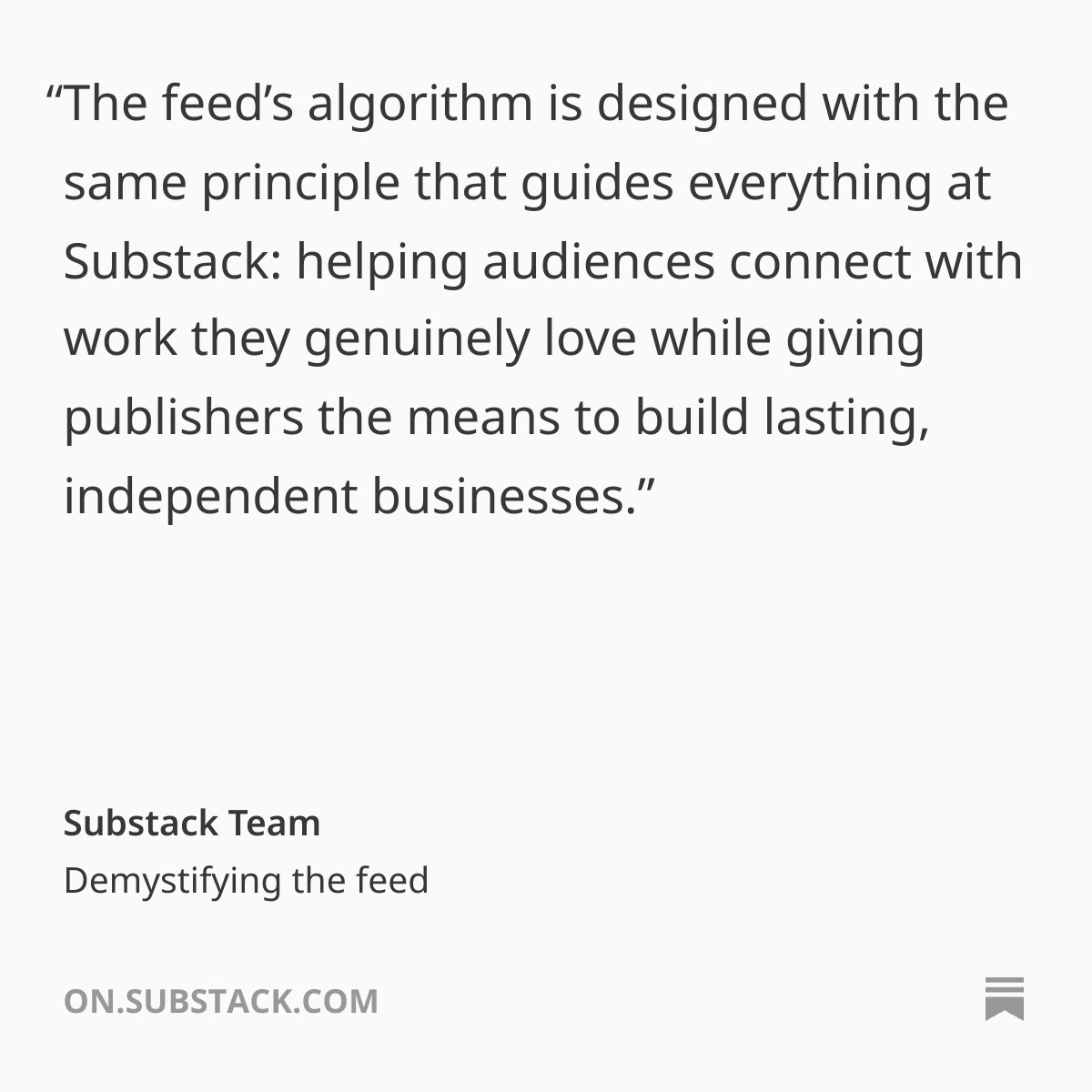
But if you click on “learn more” about the app, you’ll be shown this uplifting, inspirational quote below:
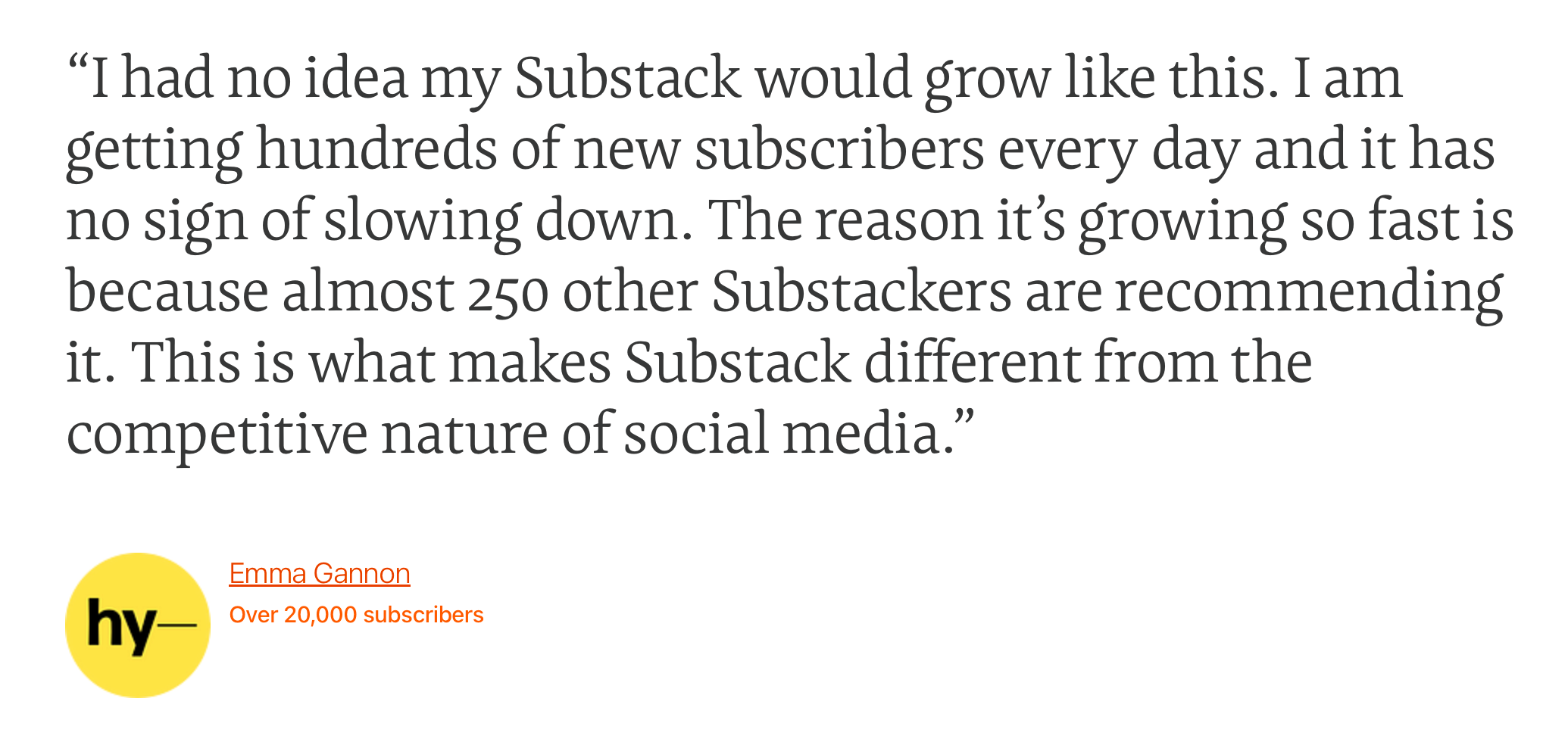
Yep. That’s the dream. Emma Gannon is the Substack dream we all aspire to, and the type of writer Substack wants to attract. But, realistically, how many Emma Gannons can you have? Not that many! Most of us will never be reach that level just because it’s mathematically impossible.
When everyone can publish, attention piles up around a few creators. The more eyes someone gets, the easier it is for them to get even more. Fame itself becomes the currency, which is why, one month ago, everybody and their mother were writing about Taylor Swift’s new album.
It has always been like that, you might say. There’s always been mentors, connectors, gatekeepers. There’s always been trends and news cycles. But the massive scale of the current attention economy compounds this effect to absurd levels.
Don’t you feel like everything is uniform, flattened? That we’re all discussing the same topics and the same people and writing from the same generic coffee shop1 while sipping a matcha latte and eating avocado toast?

Most smaller creators are scrambling for peanuts in an ecosystem where everyone else is asking the same of their readers. People will subscribe to paid newsletters, but how many? Five, ten, tops? Almost no one will subscribe to fifty newsletters. Instead, many of us rotate them—one in, one out. That’s why growing is so hard and plateaus after a while.
If I’ve realized this, so have the Substack people. Paid, long-form newsletters don’t make for the type of growth that makes investors happy.
I’m sure they started with the best intentions. They wanted to serve writers through an ethical business model where incentives are aligned. But time has passed and that premise is on its way to been disproved and soon they’ll need something new.
Ads? Sponsors? I have no clue.
In any case, writers like you and me will stop being the platform’s priority. I mean, we kinda aren’t already—look at the app, the feed, the lives, the podcasts, the videos. But it’s going to get worse.
And while they figure out what to do, they’re doing what everyone does, which is trying to get people to spend as much time on the app as possible, our attention chopped into tiny little pieces to—allegedly—be sold to the highest bidder.
Substack is not the problem
Still, I have no beef with the Substack people. I do believe their heart is in the right place. They had a beautiful dream of aligned incentives and a creator economy that would allow people to pay for and charge for good writing.
But within a startup model, they need significant growth to survive. Once money and investors are involved, everything bends toward scale, speed, and engagement. Slow, thoughtful work loses not because it’s bad, but because it doesn’t keep people clicking all day.
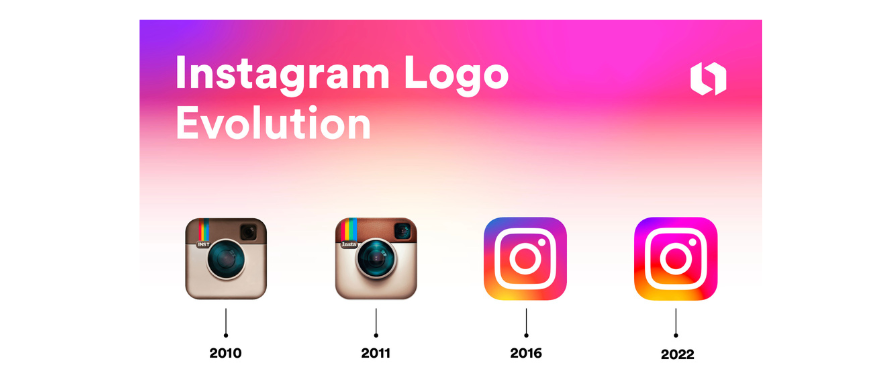
So this cycle is bound to repeat over and over even by the nicest, most ethical platforms. Remember the old Instagram? Remember feet pictures and Valencia filters and the chronological feed, that chill happy feeling after you finished checking out the people you followed, closed the app, and were done? It used to be different in there, too.
Eventually, this growth-at-all-costs mindset will fuck us all up unless we start taking action in a different direction.
Maybe we all got a bit carried away, too
Not long ago, the great Alex Dobrenko also wrote about the state of Substack:
Engagement’s down, but also: the fact that it was ever up was kinda wild, right? Maybe we all got a little entitled to something that was never promised.
The democratization of content publishing is a mirage. It’s as hard as it always was, or even harder, because now the system rewards the wrong types of behaviors. Gatekeepers have always sucked, but at least curators used to have something akin to good taste. Now? Flashy, shocking, viral content is the name of the game.
I don’t know if all of us deserve success but I know it’s impossible that we’ll all get it. For me, optimizing for the possibility of massive, global recognition that’s promised here or on other platforms is killing my creativity and my love for writing.
I wrote on Blogger for a long time and I never had more than a few dozen unique visitors every day. But I had loyal readers who stayed with me for years, who’d comment on every post, with whom I’d have coffee (and, on two occasions, even sex!) when we’d meet offline. My growth was slow, almost nonexistent, and I never “blew up,” but I’ve never been happier as a writer.
And maybe, just as there have been trends these past few years to downsize our possessions, we should be thinking of downsizing our dreams a little. Which sounds anathema, I know—dream big! Grind! Hustle! But what if dreaming the type of big the system is selling is keeping us trapped? What if optimizing for an outcome that only a few will achieve ruins your real, one and only human life, your only chance at expressing yourself as a vibrant, creative soul?
I now aspire to slowly build a Minimum Viable Audience of people who love my writing and interact with it in a deep way. And I know I don’t need hundreds of thousands of those to be happy—just enough to feel seen, to know that what I do matters.
It turns out, when I manage to quiet the noise and stop the comparisons, that number is actually much lower than I would have thought.
[Another disclaimer: I’d be happy to make it big and become the next Emma Gannon. I just know that if it happens, it won’t be because I’m playing the same soul-sucking game as everyone else.]
Let’s be the change we want to see
Alex said this in the comments section of his piece. Because maybe there is a way forward for Substack. Maybe they can monetize better without losing their ethos, supporting long-form creators and respecting people’s brains. But we need to prove to them that this is what we want.
If writers keep getting more subscribers from Notes, they’ll spend more time on Notes. If articles about Taylor Swift get shared the most, we’ll keep using our talent for an umpteenth hot take that the world doesn’t need. So maybe we could all make an effort to read more long-form? To support smaller creators? To engage with our favorite writers in a more intentional way?
Here are some ideas:
Delete the app. The app is bad and evil and there’s nothing you can do to convince me otherwise.
Read Substack newsletters in your inbox only.
If your inbox has been as abused as mine and now you have a panic attack just thinking of opening it, set up an RSS feed with your favorite Substack newsletters/blogs. It takes literally two minutes and it’s changed my life. I use NetNewsWire for macOS.
Comment on people’s long-form articles, not their Notes. Yeah, I know, it takes more time and it’s harder but as a writer, a comment on my essay means a hundred times more.
Restack, restack, restack! Essays, I mean. Let’s stop restacking Notes! Let’s maybe not reward punchlines, memes, fast-food inspiration, flashy one-liners that leave you as empty as an Oreo cookie. I’d rather amplify deep thought and hard work and the hours writers spend crafting the work we put out there.
Click on recommendation blogrolls. Substack hides the blogroll so far below the fold it’s a bit ridiculous2 but why not make an effort? You can see what other writers like without reading their Notes, and it will actually be more accurate than algorithmic feeds because it’s been curated by a human.
Follow people through their comments. Appreciate thoughtful engagement with long-form posts by checking out people’s profiles and interacting with or subscribing to their writing if you like it.
Unleash your freak. Don’t try to please everyone. I’m really bad at this because I dislike conflict, but humanity needs us artists to take risks and spearhead change.
Amplify smaller voices. Resist hopping on trends. It’s fun to talk about what everyone else is talking about, I know. But unless we genuinely want to support and empower that creator, focusing on them just makes culture flatter and more boring.
Find the dinkiest, tackiest, scariest, wi-fi-free-est coffee shop in every town you visit. Order a regular coffee that might or might not taste like shit. Sit there for twenty minutes, look around, breath as deep as basic hygiene will allow you. Maybe even talk to someone? And then, write the fuck out of it for your readers.

I still think Substack has the bones to become an amazing place to write and read if they backtrack on the icky social-media-ification and look for other forms of monetization. It might be a tough pill to swallow initially but it would keep the ethos that brought many of us here in the first place. I’d be willing to pay a monthly fee (like I’ve done in the past with my email service providers), or even to see some sponsored content in exchange for them removing the Notes from Hell, or at least making them less central to the user experience.
(Although I’m 99% sure Notes isn’t going anywhere. But a girl can dream)
Otherwise, maybe it’s time to flock somewhere else. I’m not opposed to doing that either. But I like it here! I like the people I’ve met, the writers I’ve discovered, the hopeful possibility of reasonable growth while having fun along the way.
I do believe we can do it. We can turn this thing around. And maybe that means we have to walk backwards for a while: toward fewer people who are more invested, metrics that go down but a craft that goes up. Maybe, in the age of one-click-worldwide-publishing, we need to engineer some friction, and that friction might be made of quiet work for longer-than-pleasant stretches of time. But isn’t that what writers have done since the beginning of time? Work quietly, in fear of obscurity, perfecting their craft while no one was looking?
I don’t know about you, but I’m back to that model.
I hope I’ll see you there.


Hey!
Thanks for reading!
I’m Marina, a Spanish writer and psychologist living on a little Greek island. In June 2025, I transitioned to writing in English and I’m on Substack to find readers for my essays and fiction.
If you made it this far, can I ask you to consider one or more of the following ways to support my writing?
💌 Subscribe for two to four essays like this one every month, right into your inbox (you can opt out of getting them via email, but becoming a subscriber is still a great way to show support).
📣 Share this article with your friends. Now that I’m a Notes renegade, readers like you sharing my work is literally the only way this newsletter can find its people, and it makes a massive difference.
🎙️ Leave a comment! What are your thoughts on Notes, Substack, The Future of Humanity? I’m a biased, evolving human being and I’m more than happy to be challenged or proven wrong.
Thanks!
Besos,

This term was coined by Kyle Chayka in his excellent book Filterworld, which is essential to understand the whole fucked-upness of our algorithmified reality.
I haven’t found a way to change this but I’m not the most tech-savvy person, so feel free to take a look and please do let me know if you can fix it.
You've inspired me. You've articulated my exact experience. At this point i just want to write a third novel. I am not even sure if at this rate it will ever get published. But I cannot do this social media shit anymore. You are right. It kills real reading and writing and it kills joy. Im stopping reading Notes and I might even delete the app and try that RSS thing. Thanks Marina.
Terrific post, Marina, and nothing I'd disagree with. I think one of the best things you pointed out near the end is the importance of interacting and meaningfully engaging with posts over notes, which is where the best magic happens. Sadly, it does seem like many people are doing it perfunctorily, and it's so easy to tell when people aren't being genuine/authentic.
I think (?) I have a good, healthy approach to Notes: I don't consider it a part of growth strategy at all and I'm just trying to have fun with it. I put very little thought into my notes and I can't stand the notes that seem so contrived in their desperation to go viral (the banal, empty, one-line platitudes or anything talking of 'showing up' and 'giving permission' and 'grow, grow, grow'). I have plenty of fun banter and chit-chat on notes, and that works for me and keeping me sane and balanced.
What kills me and drives me berserk are the writers with modest engagement who don't respond to comments consistently. I will stop reading them if the frustration gets too much (especially when they're writing stuff I disagree with or want to discuss a bit).
There are enough good people on Substack to keep this place fun and grounded (I hope!)